

If an oven will not heat, first confirm the selected mode, temperature, clock, and power supply. A gas or electric oven can fail for different reasons, so avoid ordering an element, igniter, or sensor from the symptom alone. If you smell gas, see smoke, or a breaker trips repeatedly, stop using the oven and address safety before troubleshooting.
This guide is for San Diego-area households with residential gas or electric ovens. It explains safe external checks, how to distinguish no heat from slow or uneven heating, when to arrange a diagnosis, and how to compare repair with replacement. Contents: symptoms; step-by-step checks; a gas/electric comparison; costs and outcomes; and common questions.
Separate no heat, slow preheating, and uneven cooking
An oven that stays cold is different from one that eventually reaches temperature but browns food unevenly. The first may involve a missing power supply, gas ignition, a heating element, or controls. The second may involve a temperature sensor, door seal, fan, rack placement, or normal cycling that is being judged too early. Recording the exact pattern prevents unnecessary parts replacement.
Note whether the cooktop still works, whether the oven display is lit, whether the broil and bake modes behave differently, and whether a fault code appears. A functioning cooktop does not prove that the oven’s heating system is sound. LG’s official gas and electric oven help guidance asks users to check settings and power before proceeding to component diagnosis. Use the instructions for your own model because controls and test modes differ.
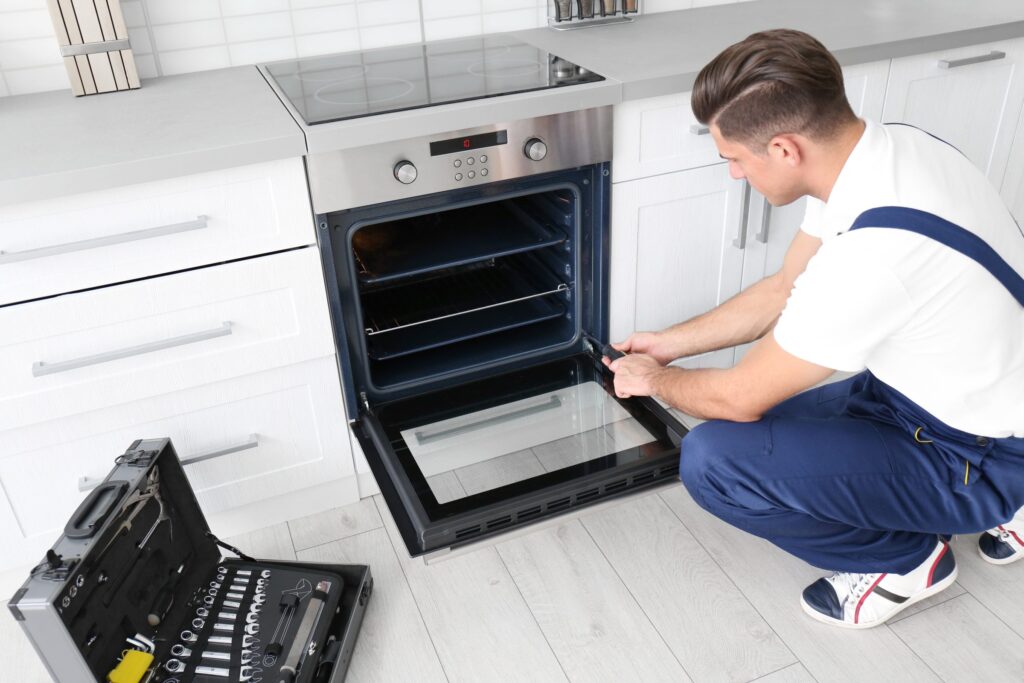
Safety checks before another cooking attempt
If you smell natural gas or suspect a leak, leave the area and call 911 or San Diego Gas & Electric from a safe location. SDG&E advises against operating electrical switches or trying to locate the leak yourself. If you see smoke from wiring, a glowing damaged connection, or an oven that trips its breaker again, stop using it and request qualified help. Do not bypass a safety device or keep resetting a breaker to finish cooking.
Let the oven cool before touching racks or visible interior surfaces. Never remove an energized back panel, probe live terminals, or disconnect a gas connection as part of a casual household check. A wall oven may have a dedicated circuit and a range may share controls with a cooktop; the exact installation matters. If you are unsure which supply or breaker serves the appliance, ask a qualified professional rather than guessing.
A practical checklist for an oven that will not heat
1. Verify the controls and mode
Confirm that you selected Bake or another intended heated mode, entered the temperature, and started the cycle. Some controls require a separate Start confirmation; others can be delayed by a timer or delay-start setting. A control lock or Sabbath mode can change what the display and buttons do. Consult the owner’s manual for the exact indicator. Cancel the program and repeat a normal bake selection only if there is no gas odor or electrical warning sign.
2. Check external power
If the display is blank, check whether other outlets or appliances in the area work. Locate the identified oven circuit in the electrical panel if safe to do so. A tripped breaker or blown fuse can explain a no-heat condition, but a breaker that trips again suggests an underlying circuit or appliance fault. Stop there and arrange an electrician or appliance technician as appropriate. Do not use an extension cord or alter wiring to make the oven run.
3. Observe bake and broil separately
If your manual permits it and the oven is safe to operate, note whether Bake and Broil each produce heat. On an electric oven, a visibly damaged element may be a clue, but appearance alone is not a diagnosis. On a gas oven, an ignition component may fail even while the display and cooktop work. Do not peer into a hot compartment for a long period or attempt to touch an element. Write down the mode, selected temperature, error code, and what happened.
4. Consider the door and placement
A door that does not close fully can release heat and extend preheating. Check for an item caught in the opening and obvious seal damage after the oven is cool. Avoid pulling or replacing a gasket unless the manual provides a safe procedure. For uneven cooking, use the recommended rack position and a pan that allows airflow. A crowded oven or repeated door opening can create inconsistent results without a failed component.
5. Confirm temperature with a controlled test
If the oven heats but food consistently overcooks or undercooks, compare more than one bake over time. An oven thermometer can provide a useful reference, but readings fluctuate during normal cycling; a single moment is not proof that calibration is wrong. Follow the manufacturer’s calibration instructions if available and record the average behavior under a stable setting. Do not change calibration dramatically to cover up a persistent sensor, fan, or control fault.
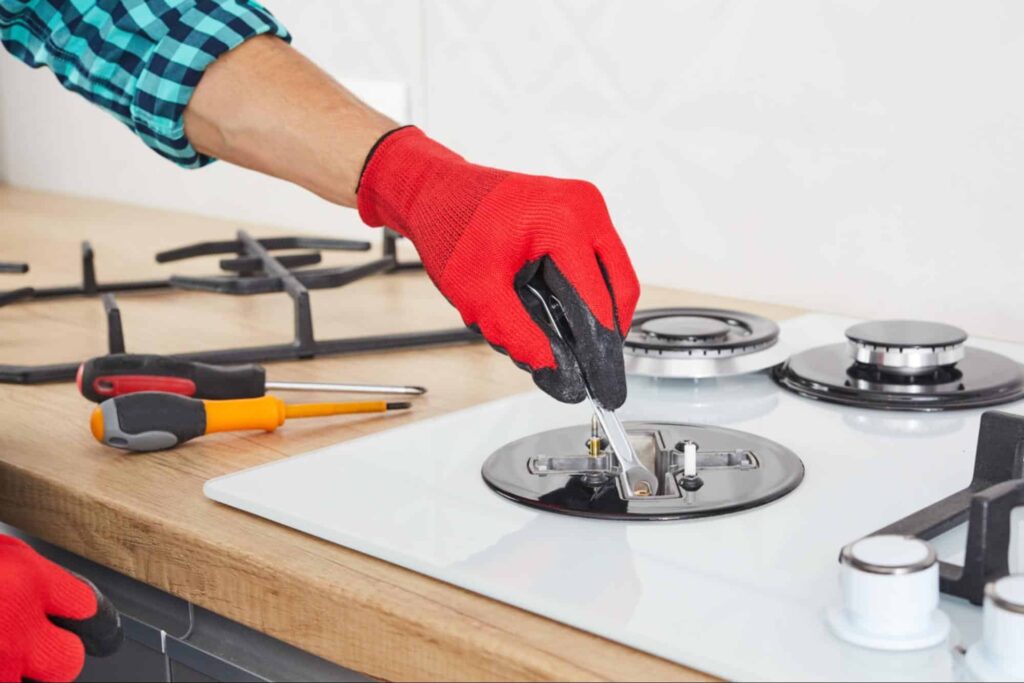
Compare likely paths for gas and electric ovens
| Symptom | First safe check | Possible professional diagnosis |
|---|---|---|
| Display blank, no heat | External power and breaker | Supply, wiring, or control |
| Electric oven heats in Broil but not Bake | Confirm modes and record behavior | Bake element, wiring, or control |
| Gas oven does not ignite | Confirm no gas odor; verify settings | Igniter, supply, sensor, or control |
| Heats but cooks unevenly | Rack, pan, door, and comparable test | Sensor, fan, seal, or heating performance |
| Breaker trips or gas odor occurs | Stop operation | Qualified electrical or gas assessment |
These are pathways, not definitive diagnoses. A technician should test the relevant circuit or ignition system according to the model before recommending a component. The fact that an electric element glows, for example, does not by itself verify temperature control. A gas oven can have different ignition arrangements. The manual and model number matter more than a generic online parts list.
When repair service is the next step
Book a diagnosis if the basic setting and supply checks do not restore heat; the oven repeatedly displays a code; one mode works while another does not; or cooking is consistently uneven under a controlled test. For a local visit, the site’s oven repair service describes support in San Diego County. If a separate cooktop burner has the problem, use the stove and cooktop repair page to describe that symptom accurately.
Have the full model number, fuel type, error code, and observed behavior ready. Ask the technician to explain what was tested and why the proposed part or adjustment addresses the fault. An itemized quote should identify diagnosis, parts, labor, tax if applicable, and warranty terms. Ask whether the repair includes a final heating and safety check. Do not approve a parts purchase based solely on a guess that “it is probably the thermostat.”
Repair versus replacement: the whole cost
The initial diagnostic fee and repair estimate are only part of the comparison. A replacement may also involve delivery, installation, removal, cabinet fit, electrical or gas connection work, and disposal. For a built-in wall oven, measurement and trim compatibility can add complexity. For a range, the cooktop and oven share one unit, so assess both sections before deciding. Check any remaining manufacturer or extended warranty before paying for covered work.
Repair may be sensible when the fault is clear, the component is available, the appliance has otherwise performed well, and the quoted total is substantially below a suitable installed replacement. Replacement may be more practical when multiple major faults recur, needed parts are unavailable, or the all-in new cost approaches the repair. There is no universal dollar threshold or age rule that fits every model and household. Compare written totals and expected functionality rather than sticker prices alone.
How to check that the problem is resolved
After service, preheat using the mode that previously failed. Confirm the oven reaches a stable operating state without a recurring code, breaker trip, smell, or unexpected shutdown. If uneven cooking was the complaint, repeat a representative recipe or controlled test with the same rack and pan position. Ask the technician which components were tested and keep the receipt and warranty details. A single successful display reading is less convincing than normal cooking behavior.
Continue basic care: keep the door closing properly, avoid blocking vents, and clean spills according to the manufacturer’s instructions. If the oven still takes unusually long to preheat or heat varies sharply, report the exact test result. That follow-up gives the service provider a better basis for investigating an intermittent problem. Do not operate an appliance that shows a fresh gas or electrical warning just because the food cooked once.
Mistakes that can make oven problems worse
Ordering a part from an online symptom list: several components can cause no heat, so require model-specific testing. Repeatedly resetting a breaker: a recurring trip calls for inspection. Ignoring gas smell: leave and call from a safe place. Judging temperature from one thermometer reading: ovens cycle above and below a set point; use a controlled assessment. Overlooking the installed replacement cost: include delivery, fit, connections, and removal when comparing quotes.
Frequently asked questions
Why does the cooktop work but the oven stay cold?
The cooktop and oven can have separate heating or ignition components. Record the oven mode and any error code, then request a diagnosis if basic settings are correct.
Can a tripped breaker cause an oven not to heat?
Yes, lost electrical supply can prevent heating. A breaker that trips again needs professional assessment rather than repeated resets.
Why does Bake fail while Broil works?
The modes may use different elements or control paths. The pattern helps a technician test the correct system but does not identify one part conclusively.
What if a gas oven clicks but never heats?
Ignition or supply problems are possible. If you smell gas, leave and call from a safe location; otherwise arrange model-specific service.
Is a long preheat time always a repair issue?
No. Door openings, a crowded oven, a selected mode, and the model’s normal behavior matter. A persistent change from its usual performance warrants diagnosis.
Can I replace an oven element myself?
Only if the fault is correctly identified and you can follow the model’s electrical service procedure safely. If not, hire a qualified technician.
How do I know whether the temperature is inaccurate?
Use repeated comparable cooking results or a controlled thermometer check, accounting for normal cycling. A single reading is insufficient.
When should I replace rather than repair the oven?
Compare an itemized repair estimate with the fully installed replacement cost, parts availability, warranty, and the appliance’s overall condition.
Next step
Write down the fuel type, model, mode, selected temperature, error code, and exact heating pattern. Complete only the safe external checks. If heat remains unreliable, request a diagnosis and compare the written repair scope with the full cost of an appropriate replacement.