

A refrigerator that is running but not cooling needs a measured response: protect the food first, then check the settings, door seal, airflow, and condenser area before assuming a failed compressor. Those checks often reveal a simple cause, but a warm cabinet, repeated temperature rise, or unusual mechanical noise calls for professional diagnosis.
This guide is for San Diego-area homeowners and renters with a household refrigerator. It explains safe checks you can make without opening electrical panels or handling refrigerant. We cover: food safety; the cooling system in plain language; a step-by-step checklist; what different symptoms suggest; repair-versus-replacement decisions; and common questions.
First, protect food and confirm the temperature
Put an appliance thermometer in the middle of the refrigerator, away from the door, and a separate one in the freezer if you have it. The U.S. FoodSafety.gov guidance sets 40°F (4°C) or below for a refrigerator and 0°F (−18°C) or below for a freezer. A control dial setting is not a temperature measurement. Give the thermometer time to settle and note the readings, time, and whether the door has recently been open.
If food is warming, move perishables to a known-cold refrigerator or an ice-filled cooler while you investigate. FoodSafety.gov advises discarding refrigerated perishables that have been above 40°F for more than two hours. Its four-hour rule for an unopened refrigerator applies to a power outage with the door kept closed; it should not be used to judge a refrigerator that has been slowly failing for days. When the temperature history is unknown, avoid tasting food to decide whether it is safe.
How a refrigerator cools—and why one section may warm first
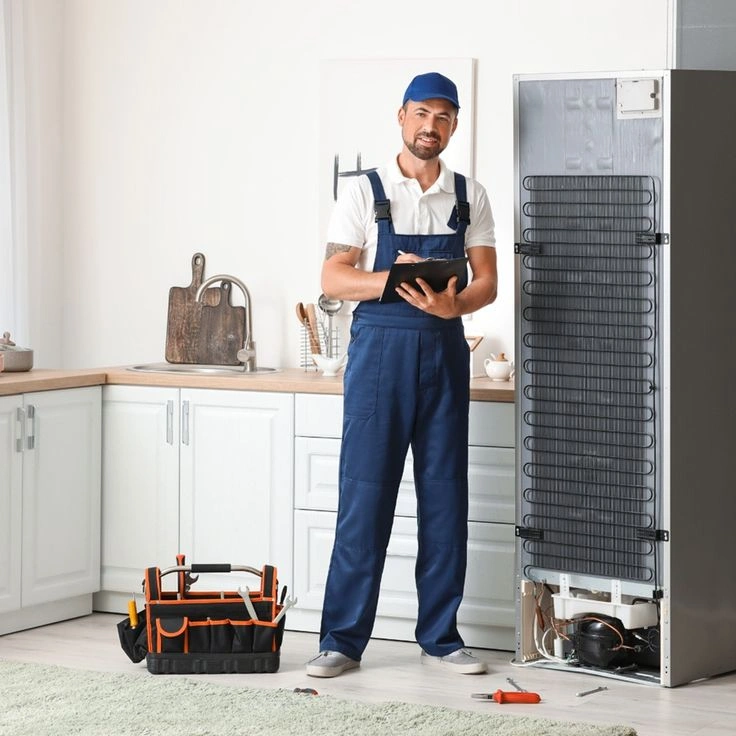
A household refrigerator moves heat from its compartments to the room. Its sealed refrigerant circuit, compressor, condenser, evaporator, and fans work together; controls decide when cooling runs. Many designs cool the freezer first and move some cold air into the fresh-food compartment. Consequently, a cold freezer with a warm refrigerator can point toward restricted airflow, a fan, a damper, or frost around the evaporator. It does not prove which part has failed.
Different layouts behave differently, so find the model number and consult the owner’s manual before removing a filter or panel. Whirlpool’s refrigerator troubleshooting guidance identifies settings, door gaskets, blocked vents, ventilation around the unit, and dusty condenser coils as reasonable first checks. Those are useful observations for many brands, but exact access and cleaning instructions depend on the model.
A safe, step-by-step cooling checklist
1. Check power, mode, and recent changes
Confirm that the interior light or display works, the plug is secure, and the circuit has power. Look for a showroom, demo, vacation, or cooling-off mode; these labels vary. Check whether anyone changed the target temperature, loaded a large amount of warm food, or left the door open. Correct the setting using the manual, close the door, and remeasure later. A single warm reading immediately after loading groceries does not by itself diagnose a breakdown.
2. Inspect the door seal and how the door closes
Look for packaging, a misaligned shelf, or a drawer stopping the door from closing. Wipe obvious residue from the gasket and cabinet contact surface with a mild solution approved by the manufacturer. Inspect for gaps, tears, or a gasket that no longer sits flat. Do not replace a seal merely because it looks old: first confirm that the door and hinges align and that nothing inside pushes it open. Excess moisture, condensation, or frost around the door strengthens the case for an air leak.
3. Restore airflow inside and around the appliance
Move food away from interior supply and return vents. Crowding a shelf can block the path between sections and produce a warm spot even when the cooling system runs. Keep the manufacturer’s specified space around the exterior, especially where heat leaves the cabinet. Avoid pushing a freestanding unit tight against a wall if its manual calls for clearance. If the freezer is cold but the refrigerator is warm, record that difference for the technician.
4. Check accessible condenser areas
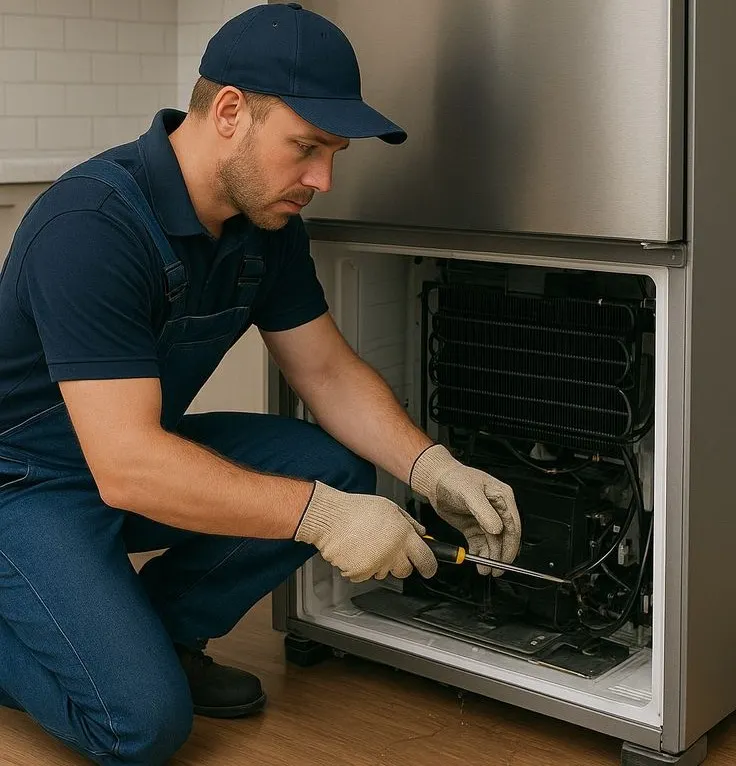
Dust can reduce heat transfer and make the system work harder. If your manual shows an accessible condenser grille or coil, switch off and unplug the appliance before cleaning; use the recommended brush or vacuum method and avoid bending tubing. Some models have enclosed condensers that are not owner-serviceable. Do not remove electrical covers or reach into moving fans. After restoring power, track the thermometer rather than judging success by the sound of the compressor alone.
5. Record persistent symptoms
Note whether the compressor runs continuously, starts and stops rapidly, makes a new clicking or grinding sound, or never starts. Photograph unusual frost and any display error code before it disappears. If you see heavy ice on the back wall of the freezer, avoid chipping it with a knife: a puncture can damage the sealed system. A repeated rise above safe food-storage temperature, even after the basic checks, warrants service.
What the symptom can—and cannot—tell you
| Observation | Reasonable first check | When diagnosis is needed |
|---|---|---|
| Both sections warm | Power, cooling mode, door closure, exterior ventilation | Temperature stays high or compressor/fans behave abnormally |
| Freezer cold, refrigerator warm | Blocked air vents, overpacking, visible frost | Airflow remains weak after obstructions are removed |
| Frost or condensation near door | Gasket cleanliness, obstruction, hinge alignment | Door still leaks or frost rapidly returns |
| Runs constantly | Temperature setting, door use, room ventilation | Continuous running accompanies poor cooling |
This table separates observations from diagnoses. For example, a warm fresh-food section might involve a fan or damper, but it might also be caused by food blocking the air path. Replacing a part based on one symptom wastes money and may leave the actual fault in place.
Repair or replace: make the decision after diagnosis
Start with the refrigerator’s age, the precise fault, the written repair estimate, parts availability, warranty status, and how reliably it cooled before this problem. A modest door-seal or fan repair is a different decision from a major sealed-system repair. Compare the full price of a suitable replacement—including delivery, installation, removal, and any needed fit changes—with the estimated repair and expected remaining use. No fixed percentage rule works for every appliance.
Energy use also matters, particularly for older units that run continuously. ENERGY STAR offers refrigerator energy-cost information and a replacement calculator for U.S. households. Use your own model and electricity rate rather than a generic savings claim. Replacement may be attractive when several major faults coexist, parts are unavailable, or the repair cost approaches the installed price of a suitable new refrigerator. Repair may make more sense when the diagnosis is clear, the cabinet and doors are sound, and the work has an appropriate warranty.
For a San Diego service decision, ask what the diagnostic fee covers, whether it is applied toward the repair, the itemized labor and parts cost, and the warranty terms. We cannot responsibly quote a universal local repair price because model, access, parts, and fault differ. If freezer performance is also affected, compare the findings with the site’s freezer repair service; for the core appliance, see refrigerator repair in San Diego.
Mistakes that make cooling problems worse
Repeatedly opening the door: this adds heat while you are trying to measure recovery. Keep it closed between planned checks. Turning the dial to its coldest setting without measuring: that can hide the trend and freeze food in one zone without fixing an airflow problem. Using hot tools or sharp objects on frost: these can damage plastic or refrigerant tubing. Assuming a running fan means the compressor is healthy: different components can operate independently. Ignoring food safety while waiting: a repair can restore the machine but cannot make spoiled food safe.
How to judge whether the fix worked
Before service, record temperatures and when they were taken. After any adjustment or repair, monitor both compartments with thermometers over the next normal operating period, limiting unnecessary door openings. Check whether the unit reaches and holds the recommended storage temperatures while loaded normally. Look for renewed frost, water, loud cycling, or a door that still does not close. A brief cool blast from a vent is not the same as stable food-storage temperature.
If the problem returns, give the service provider the temperature log, photos, model number, prior repair details, and any error codes. Those details shorten the path from a vague complaint—“not cooling”—to a targeted inspection. Avoid arranging another visit solely by saying that the appliance seems warm; measured temperatures are much more useful.
Frequently asked questions
Why is my refrigerator warm but my freezer cold?
Cold air may not be reaching the fresh-food section. Check blocked vents, crowding, and visible frost; a technician can then test the fan, damper, and defrost system.
How long should I wait after changing the temperature setting?
Follow the model’s manual and compare thermometer readings over time. A large food load or frequent door opening can delay stabilization; a continuing rise is more concerning than one reading.
Can dirty condenser coils stop cooling?
Dust can reduce heat rejection and strain cooling. Clean only accessible areas according to the owner’s manual, with power disconnected.
Does a clicking sound mean the compressor is broken?
No. Clicking has several possible causes. Note the sound pattern and temperature trend; a technician needs to test the start and control components before naming the fault.
Should I unplug a refrigerator that is not cooling?
If there is smoke, burning odor, damaged wiring, or another immediate electrical hazard, disconnect it if safe and seek help. Otherwise, document the symptoms and follow the manual or technician’s advice.
Can I repair a refrigerant leak myself?
Do not open the sealed refrigerant circuit. It requires appropriate equipment and qualified service; the exact requirements depend on the refrigerant and jurisdiction.
Is a door gasket worth replacing?
It can be when a confirmed leak is the main fault and the door aligns properly. Ask for a diagnosis before buying a gasket that may not solve the problem.
How do I know food is still safe?
Use actual temperature and time, not smell or taste. FoodSafety.gov recommends discarding perishables held above 40°F for over two hours; when the history is uncertain, take a cautious approach.
Next step
Measure both compartments, protect perishable food, and complete the safe door, vent, setting, and accessible-coil checks. If cooling remains unreliable, arrange a diagnosis with your model number and temperature log in hand. That evidence helps you decide whether a specific repair or replacement offers better value.